The Clock Is Not Free: Turning Dwell-Time Evidence Into Detention Revenue
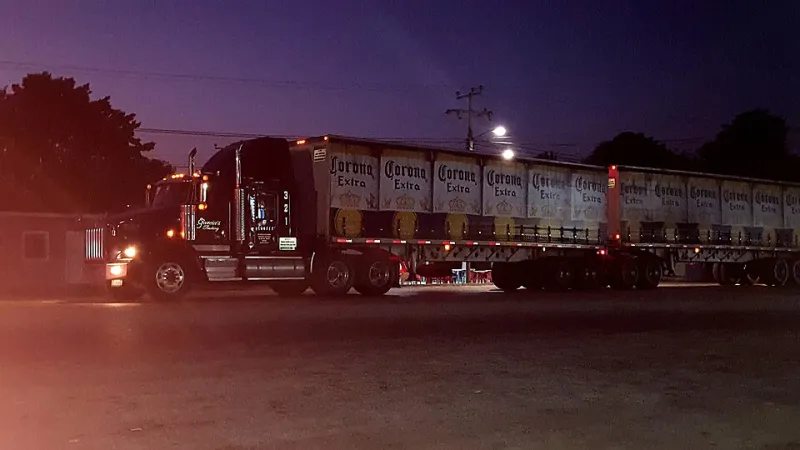
Photo: Bernard DUPONT, CC BY-SA 2.0, via Wikimedia Commons
Every carrier has a version of this story. The tractor pulls into the distribution center at 07:40 for an 08:00 appointment. The trailer sits on the yard until 13:15. The driver logs five hours and thirty-five minutes of dwell against a rate confirmation that promised two hours of free time and $50 per hour thereafter. The detention invoice goes out. Six weeks later it is denied, short-paid, or quietly ignored — and the operations manager, who has 40 loads to cover this week, does not have the appetite for a fight over $175.
That decision, repeated across thousands of loads, is how detention became a structural subsidy that carriers extend to their customers without ever voting on it.
A Cost That Rarely Appears on Any Invoice
Detention is expensive precisely because it is invisible. It does not show up as a line item in the transportation management system. It appears as reduced miles per tractor, compressed hours of service, missed appointment windows downstream, and drivers who leave for a competitor that respects their clock.
The arithmetic is unforgiving. Suppose a fleet runs 40 stops a week and averages just 12 minutes beyond contractual free time at each one. That is eight hours of tractor and driver capacity lost weekly — roughly 400 hours a year. Priced at $50 an hour, the recoverable portion alone exceeds $20,000 annually, and that figure ignores the revenue the equipment would have generated had it been moving.
Most fleets know the number is real. Very few can prove it at the facility level, which is the only level at which it can be recovered.
Why Carriers Lose the Argument Before It Starts
The typical detention claim rests on a driver's recollection and a paper bill of lading. Against that, the shipper has a gate log, a receiving system, and a dock schedule — all of which record the facility's version of events, and none of which the carrier can audit.
Three gaps recur:
- Arrival is undefined. Was the truck "arrived" when it entered the property, when it reached the guardhouse, or when the driver checked in? Each definition produces a different detention number, and the facility picks the one that suits it.
- Dwell is not segmented. Time waiting for a dock door, time at the door, and time waiting for paperwork are operationally distinct and often contractually distinct. A single arrival-to-departure figure cannot support a disputed claim.
- The clock is not immutable. Screenshots, spreadsheets, and manually entered times are easy to challenge. Timestamped GPS records attached to a specific load are not.
What Defensible Dwell Data Looks Like
A modern telematics platform can generate a detention packet the same way a maintenance system generates a repair order — automatically, from a defined rule set, with an audit trail.
The building blocks are straightforward:
- Primary and secondary geofences. A perimeter fence establishes site arrival. Interior fences around the guardhouse, the staging lot, and individual dock doors allow the platform to reconstruct the full visit.
- Event segmentation. Arrival, check-in, dock assignment, door open, loading or unloading complete, door close, paperwork issued, and departure — each captured as a discrete timestamp.
- Threshold rules. The carrier defines free time by contract, per customer if necessary. When dwell exceeds that threshold by a configurable margin, the platform opens an exception.
- Document attachment. Photographs of the bill of lading, signed in and out sheets, and seals are tied to the dwell record through a driver mobile workflow, so the evidence set is complete before the truck leaves the property.
- Immutable history. Records are retained with a full audit log, which matters when a claim is challenged months later.
Automating the Paper Trail
Evidence alone does not recover money. The claim has to be produced, delivered, and tracked.
A practical workflow looks like this: the rules engine generates a detention event, a standard packet is assembled with the timestamps and documents, an invoice is issued against the rate confirmation terms, and the claim is delivered to the broker or shipper through email or an API connection. An aging dashboard then tracks open claims by customer and by facility, so disputes surface in a review meeting instead of dying in an inbox.
For many carriers, the first ninety days of automated claims do not produce a windfall; they produce a baseline. That baseline is the actual asset.
From Recovery to Repricing
Once dwell data is aggregated, patterns emerge that no single claim reveals. Particular facilities are chronically late during produce season. Particular receivers are slow on Monday mornings. Particular lane pairs consistently produce losses that the rate does not cover.
That is negotiating material. Carriers that arrive at contract discussions with facility-level dwell statistics can do three things a rate negotiation normally does not allow: adjust accessorial schedules to reflect actual facility performance, build dwell assumptions into linehaul pricing, and decline work that cannot be made profitable.
It also changes internal decisions. A facility scorecard informs appointment scheduling, trailer pool sizing, and whether a dedicated lane is worth bidding at all.
The Payoff Operators Underestimate
Detention is usually discussed as a revenue problem. It is at least as much a safety and retention problem. Time spent waiting on a yard is time that cannot be driven later in the day, which pushes drivers toward the end of their legal window and toward the speed and fatigue decisions that follow from it. A 2018 study commissioned by the Federal Motor Carrier Safety Administration documented precisely this pressure.
Fleets that measure detention can defend their drivers' schedules with data rather than protest. In a market where qualified drivers remain difficult to retain, that is worth more than the recovered accessorials.
Where to Start
Do not begin with a negotiation. Begin with thirty days of measurement and no announcements. Identify the ten facilities generating the most dwell by volume, confirm that the geofences around them are accurate, and define free time per customer from the rate confirmations already on file.
Only after the baseline exists should thresholds be automated and claims issued. Fleets that skip the measurement phase tend to build elaborate dispute processes around data that is not yet trustworthy — and lose the argument a second time, for a new reason.