The Cost of Standing Still: How Idle Vehicles Are Quietly Draining Fleet Profitability
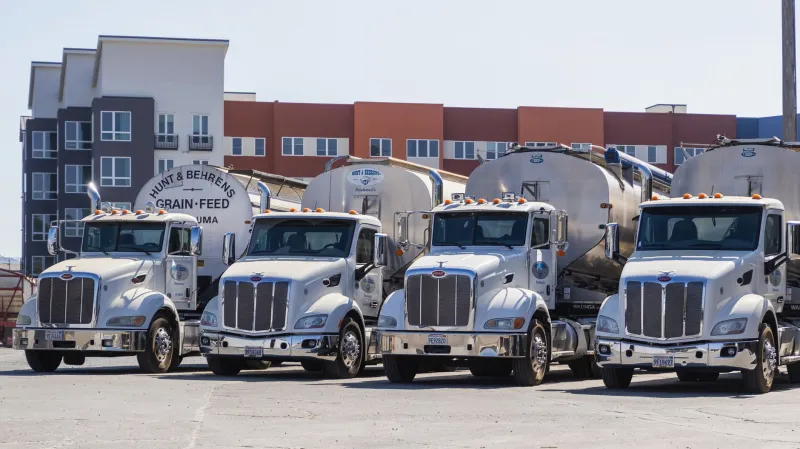
In fleet management, attention naturally gravitates toward motion — route efficiency, fuel consumption per mile, driver behavior behind the wheel. Yet some of the most significant financial losses in modern fleet operations have nothing to do with movement at all. They happen when vehicles aren't moving, when equipment sits between assignments, and when yard operations lack the coordination to keep assets productively deployed.
Idle time is not a new problem. But for many US fleet operators, it remains a poorly measured one. Without precise, real-time data to expose where and when vehicles are stationary — and for how long — idle hours accumulate silently, compounding into annual losses that rarely appear as a single line item on any operational report.
The Scope of the Problem Most Operators Underestimate
Industry estimates consistently suggest that engine idling alone costs US commercial fleets billions of dollars each year. A heavy-duty diesel engine idling for one hour can consume between 0.8 and 1.0 gallons of fuel. For a mid-sized fleet operating 50 vehicles, even modest daily idle periods of 30 minutes per vehicle translate into thousands of gallons of wasted fuel annually — before accounting for the accelerated engine wear that accompanies unnecessary idling.
But fuel is only one dimension of the idle time problem. The deeper cost lies in asset underutilization. A vehicle parked between jobs is not generating revenue. A piece of equipment sitting in a staging yard awaiting reassignment represents capital that is depreciating without producing output. When fleet managers lack real-time visibility into asset location and status, the default response is often to over-provision — purchasing or leasing additional vehicles to compensate for availability gaps that better utilization would eliminate.
For many operations, the true fleet size required to meet service demands is meaningfully smaller than the fleet currently being maintained. The difference is idle time that hasn't been measured, understood, or addressed.
Where Idle Time Hides in Plain Sight
Telematics data reveals that idle time concentrates in predictable but often overlooked operational zones. Yard operations are a primary culprit. Vehicles queued for loading or unloading, equipment awaiting dispatch, and assets cycling through maintenance hold patterns all accumulate stationary hours that traditional operational metrics rarely capture with precision.
Job site dwell time is another significant contributor. In construction, utilities, field services, and delivery operations, vehicles frequently arrive at a location well ahead of when work can begin — or remain parked after completing a task while drivers await updated instructions. Without real-time visibility into these patterns, fleet managers have no practical mechanism to intervene or redesign workflows to reduce unnecessary stationary periods.
Long-haul and regional trucking operations face a related challenge in the form of detention time — hours lost at shipper and receiver facilities that extend vehicle stationary periods far beyond what operational plans anticipate. While some detention is unavoidable, telematics platforms that log arrival, departure, and engine status can document these occurrences with the precision needed to support cost recovery conversations with shipping partners.
What Real-Time Intelligence Actually Reveals
Modern GPS and telematics platforms do considerably more than log vehicle location. When properly configured, they create a continuous operational record that distinguishes between productive stationary time — a scheduled delivery stop, a planned maintenance interval — and unproductive idle periods that represent genuine waste.
This distinction matters. A fleet manager reviewing aggregate idle time data without contextual filtering may draw inaccurate conclusions about where inefficiencies are actually occurring. Sophisticated telematics systems allow operators to define geofenced zones — customer locations, job sites, maintenance facilities, company yards — and classify stationary time within those zones according to operational purpose. What remains outside those classifications becomes the true idle problem: time that cannot be attributed to any productive function.
Once that unproductive idle time is isolated and quantified, the financial implications become concrete. Fleet managers can calculate the per-vehicle, per-route, and per-driver cost of idle patterns with sufficient specificity to prioritize intervention. A vehicle consistently accumulating two hours of unclassified idle time per shift presents a very different optimization opportunity than one logging 15 minutes.
Translating Data Into Operational Change
Quantifying idle time is a necessary first step, but the ultimate value of telematics intelligence lies in what it enables operationally. Several categories of improvement consistently emerge when fleets apply real-time visibility to idle time reduction.
Dispatch and scheduling adjustments represent the most immediate lever. When telematics data reveals that vehicles routinely arrive at job sites significantly ahead of when work begins, dispatchers can recalibrate departure times or sequence assignments differently to reduce unproductive waiting periods without compromising service commitments.
Yard management efficiency improves substantially when operators have real-time visibility into asset location and readiness status. Rather than relying on manual check-ins or driver communication, fleet coordinators can monitor which vehicles are available, where they are positioned within a facility, and how long they have been stationary — enabling faster, more accurate dispatch decisions.
Driver coaching programs benefit from idle time data in ways that extend beyond fuel savings. Telematics platforms that flag prolonged idling events allow managers to have specific, data-supported conversations with drivers about habits that contribute to unnecessary fuel consumption and engine wear. When coaching is grounded in objective operational data rather than general guidance, behavioral change tends to be more durable.
Fleet right-sizing decisions become more defensible when supported by utilization analytics derived from real idle time measurement. If telematics data demonstrates that a meaningful portion of the fleet consistently logs low utilization rates, the case for reducing fleet size — or deferring planned expansion — rests on a factual foundation rather than intuition.
The Compounding Return on Visibility
One of the more counterintuitive aspects of idle time optimization is how quickly incremental improvements compound across a fleet. A reduction of 20 minutes of unproductive idle time per vehicle per day may appear modest in isolation. Across a fleet of 75 vehicles operating 250 days per year, that reduction translates into more than 6,200 hours of recovered operational capacity annually — capacity that can be redeployed toward revenue-generating activity or used to justify a leaner asset base.
The same compounding logic applies to fuel savings, maintenance cost avoidance, and emissions reduction — a dimension of increasing relevance as US regulators and corporate sustainability commitments place greater scrutiny on fleet environmental performance.
For fleet managers operating under pressure to demonstrate financial discipline without compromising service levels, idle time represents one of the most accessible and well-documented optimization opportunities available. The losses are real, the measurement tools exist, and the operational levers to address the problem are within reach.
The vehicles are already generating the data. The question is whether fleet operations are using it.