Visibility Is the New Currency: How Complete Fleet Transparency Is Rewriting the Rules of Last-Mile Delivery
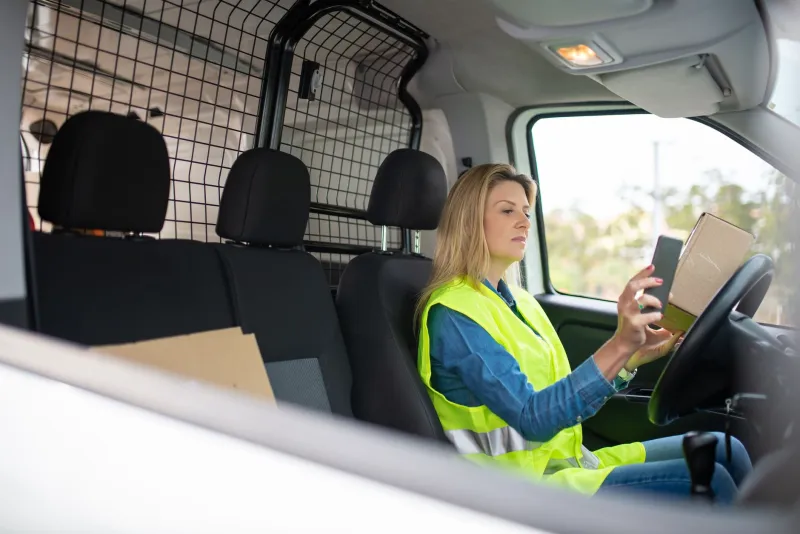
There is a moment familiar to virtually every American consumer: the package that was supposed to arrive by Thursday that simply disappears into a vague status of "in transit," prompting repeated refresh cycles on a tracking page that offers nothing useful. It is a frustrating experience — and increasingly, it is an experience that customers are no longer willing to tolerate.
This shift in expectation, accelerated dramatically by the pandemic-era explosion in e-commerce, has quietly become one of the most consequential forces reshaping the logistics industry. The companies that recognized it early and invested in the operational infrastructure to meet it are pulling ahead. Those that have not are discovering that last-mile delivery is no longer just a fulfillment function. It is a customer experience touchpoint — and one with direct implications for brand loyalty and revenue.
The Expectation Gap That Opened Overnight
For much of the past decade, the gold standard for delivery transparency was a series of static status updates: order confirmed, shipped, out for delivery, delivered. Amazon's gradual introduction of real-time map tracking for Prime deliveries began to erode that standard, but the shift accelerated sharply between 2020 and 2022 as consumers who had never previously thought much about supply chains found themselves intensely focused on when their groceries, medications, and household essentials would arrive.
By 2023, research from Convey (now part of Project44) indicated that 88 percent of U.S. consumers considered real-time shipment tracking either important or very important to their purchasing decisions. More significantly, 69 percent reported they were less likely to shop again with a retailer following a poor delivery experience — even when the retailer itself was not responsible for the logistics failure.
This is the expectation gap that has opened beneath the feet of logistics operators who have been slow to modernize. Consumers are not merely hoping for transparency. They are making purchasing and loyalty decisions based on it.
What "360-Degree Visibility" Actually Means in Practice
The phrase gets used frequently in logistics technology marketing, but it is worth being precise about what comprehensive fleet visibility actually requires — because partial solutions are not sufficient to meet current market expectations.
True 360-degree fleet visibility means that every stakeholder in the delivery chain — dispatcher, driver, customer, and business owner — has access to accurate, real-time information appropriate to their role. For the dispatcher, that means live vehicle locations, route progress, and exception alerts when a delivery is running behind schedule. For the driver, it means optimized turn-by-turn routing that accounts for current traffic conditions and updated stop sequencing. For the customer, it means a precise, dynamically updated delivery window and a notification when the vehicle is approaching.
Achieving this level of coordination requires more than a GPS unit bolted to a dashboard. It demands an integrated platform that connects vehicle telemetry, route optimization algorithms, customer communication tools, and reporting infrastructure into a single operational view. The technology to accomplish this exists today. The competitive question is which logistics providers are deploying it — and which are still relying on systems that provide only fragments of this picture.
The Companies Getting It Right
Several logistics operators across the United States have demonstrated what is possible when comprehensive fleet monitoring is paired with a genuine commitment to customer transparency.
A regional grocery delivery service operating in the Pacific Northwest implemented real-time vehicle tracking with automated customer SMS notifications in early 2022. Within the first quarter, their "where is my order" customer service contacts dropped by 34 percent. Driver productivity improved because dispatchers could reassign stops dynamically when a vehicle fell behind schedule, preventing cascading delays. And customer satisfaction scores — measured through post-delivery surveys — increased by 18 percentage points over the following six months.
A medical supply distributor serving hospitals and outpatient clinics across the Southeast faced a different version of the same challenge. Their customers — clinical procurement managers — required not just approximate delivery windows but precise, accountable arrival times tied to patient care schedules. By deploying a fleet monitoring solution that provided both internal operational visibility and an external customer-facing tracking portal, they were able to guarantee two-hour delivery windows with a 97 percent on-time rate. That performance level became a central element of their contract renewal pitches, and they attribute several significant account wins directly to the capability.
These are not outlier stories. They represent the leading edge of a broader competitive realignment that is underway across the last-mile logistics sector.
Proactive Communication: The Underrated Differentiator
One of the most consistently undervalued aspects of fleet visibility technology is its capacity to enable proactive customer communication — not just reactive updates. There is a meaningful difference between a customer who calls to ask where their delivery is and a customer who receives an automated alert informing them of a 20-minute delay before they even realize something is off schedule.
The psychological impact of proactive communication on customer satisfaction is well documented. Research from the Harvard Business Review has found that customers who are informed of problems before they experience them directly rate their overall service experience significantly higher than those who discover problems on their own — even when the underlying service failure is identical. In logistics terms, this means that a fleet operation with the technology to detect and communicate delays in real time can actually convert a potential negative experience into a demonstration of reliability and professionalism.
This is the competitive advantage that real-time fleet intelligence enables — and it is one that cannot be replicated by any amount of post-delivery customer service recovery.
The Competitive Calculus Is Shifting
For logistics operators still evaluating whether comprehensive fleet monitoring is a worthwhile investment, the market is providing an increasingly clear answer. The businesses capturing market share in last-mile delivery today are not necessarily the ones with the largest fleets or the lowest per-mile costs. They are the ones with the best information — about where their vehicles are, what is happening on each route, and what their customers need to know.
Visibility has become the currency of competitive advantage in this space. Platforms that provide genuine 360-degree fleet intelligence are not simply operational tools. They are the infrastructure upon which customer relationships, contract wins, and sustainable growth are being built.
The last-mile delivery revolution is not coming. For the businesses paying attention, it is already here — and the question is not whether to participate, but how quickly the necessary infrastructure can be put in place to compete effectively within it.