Static Routes, Dynamic Losses: Why Real-Time Rerouting Intelligence Is the Fleet Upgrade You Already Own
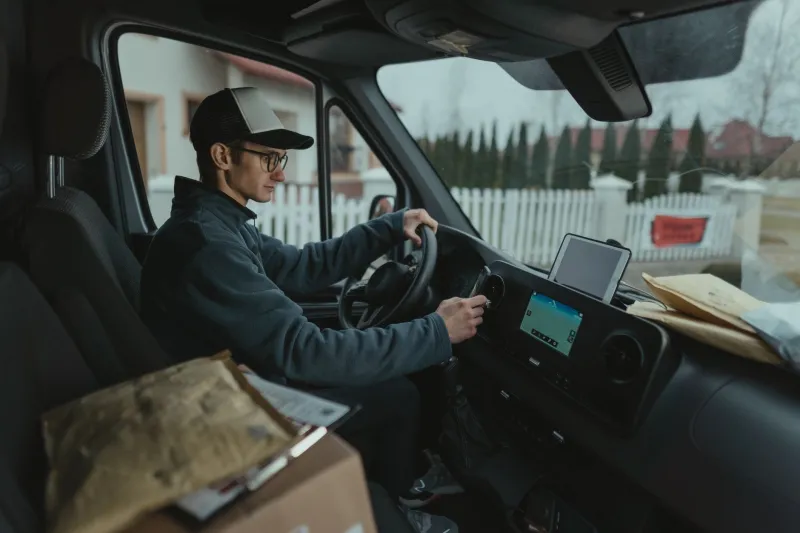
At 7:42 a.m. on a Tuesday, a delivery driver outside of Atlanta merges onto I-285 following the route his dispatcher set the night before. What neither of them knows yet is that a multi-vehicle accident three miles ahead has already compressed four lanes into one. By the time the driver realizes the extent of the delay, he has burned twenty minutes of schedule, consumed additional fuel idling in standstill traffic, and placed two downstream deliveries at risk of missing their time windows. The routing software on the dashboard had an alternative path available. It simply was not configured to act on it.
This scenario plays out in fleets across the United States every single day—not because the technology is unavailable, but because the technology is underused. Real-time dynamic rerouting is no longer an experimental feature reserved for enterprise-scale logistics giants. It is embedded in the telematics platforms that thousands of mid-market fleet operators already pay for. The question is not whether the capability exists. The question is why so many organizations are leaving it dormant.
The Difference Between Route Optimization and Route Intelligence
Route optimization, as most fleet managers understand it, is a pre-departure function. A dispatcher inputs stops, the software calculates an efficient sequence, and the driver follows the plan. For straightforward operations with predictable conditions, this approach works adequately. The problem is that road conditions, customer behavior, and weather are rarely predictable—especially across a full operating day.
Route intelligence, by contrast, is a continuous process. It ingests live data streams—traffic incident feeds, weather overlays, real-time GPS positions, and customer status updates—and recalculates optimal paths on a rolling basis. When a new variable enters the equation, the system does not wait for a human to notice and intervene. It surfaces an updated recommendation, or in fully automated configurations, pushes the adjustment directly to the driver.
The distinction matters enormously at scale. A fleet running fifty vehicles across an eight-hour shift accumulates hundreds of micro-decisions that static routing cannot accommodate. Each unaddressed disruption carries a cost: wasted fuel, missed delivery windows, overtime labor, and in some cases, lost customer relationships.
Three Scenarios Where Dynamic Rerouting Pays for Itself
Traffic Events and Incident Response
Urban freight corridors in cities like Chicago, Houston, and Los Angeles are among the most congestion-prone in the country. According to the American Transportation Research Institute, traffic congestion costs the trucking industry billions of dollars annually in lost productivity. For local and regional delivery fleets, the impact is proportionally significant even at smaller scales.
A dynamic rerouting system connected to live traffic data can identify developing bottlenecks before a driver enters them. Rather than reacting to a problem already in progress, the fleet management platform proactively surfaces an alternate corridor—one that may add two miles to the route but saves twelve minutes of delay. Across a fleet of thirty vehicles making six stops each per day, these incremental recoveries compound into measurable fuel savings and schedule adherence improvements within a single billing cycle.
Weather Disruptions Across Regional Operations
Weather-related route volatility is particularly acute for fleets operating across the Midwest and Southeast, where sudden thunderstorms, flash flooding, and winter precipitation can close roads with little warning. Static routing plans built the evening before have no mechanism to account for a road closure that develops at 9:00 a.m.
Fleets that have integrated weather data layers into their telematics platforms gain the ability to proactively reroute vehicles away from affected corridors before drivers encounter hazardous conditions. Beyond the obvious safety benefit, this capability reduces the number of emergency dispatcher interventions required during active weather events—freeing operations staff to manage exceptions rather than scramble to address cascading failures.
Customer Cancellations and Last-Minute Stop Changes
Perhaps the most underappreciated use case for dynamic rerouting is the customer-side cancellation. In industries such as food service distribution, medical supply delivery, and retail replenishment, stop cancellations and order modifications occur with regularity. When a stop drops from the manifest mid-route, a static plan simply leaves a gap. A dynamic system resequences the remaining stops in real time, potentially inserting a previously unscheduled stop from a nearby backlog queue or compressing the route to free a vehicle for an additional run.
This capability transforms cancellations from pure losses into partial recoveries. For fleets managing high stop-count routes, the ability to dynamically rebalance workloads across vehicles in real time can meaningfully improve daily throughput without adding headcount.
Why the Adoption Gap Persists
Given the clear value proposition, the persistence of static routing practices in telematics-equipped fleets warrants examination. Several factors contribute to this gap.
First, there is the configuration problem. Many telematics platforms ship with dynamic rerouting capabilities disabled by default or buried within advanced settings menus. Fleet managers who completed their initial system implementation without a dedicated optimization specialist may simply be unaware the functionality exists.
Second, there is an organizational inertia issue. Dispatchers who have built their workflows around morning route planning can perceive real-time rerouting as a threat to their established process rather than an enhancement of it. Without deliberate change management and training, technology adoption stalls at the human layer even when the software layer is fully capable.
Third, integration gaps between routing software, telematics hardware, and driver communication tools can create friction that reduces the practical utility of real-time recommendations. A rerouting alert that reaches a dispatcher three minutes after a driver has already committed to an interchange has diminishing value. Effective dynamic rerouting requires that the data pipeline from road sensor to driver device operate with minimal latency.
Unlocking What You Already Have
For fleet operators who suspect they are underutilizing their current telematics investment, the diagnostic process begins with a straightforward audit. Review your platform's feature set against your current configuration. Identify whether live traffic integration, weather overlays, and automated rerouting triggers are active. If they are not, the path to activation is typically a configuration adjustment rather than a capital expenditure.
From there, a structured pilot program—applied to a defined subset of vehicles operating in a high-congestion corridor—can generate the performance data needed to build an internal business case for broader rollout. Metrics worth tracking include on-time delivery rate, average idle time per route, fuel consumption per stop, and dispatcher intervention frequency.
The financial case for dynamic routing intelligence does not require sophisticated modeling. It requires only an honest accounting of what current conditions are costing the operation—and a willingness to let the system do what it was built to do.
The technology is already on your vehicles. The question is whether you are using all of it.