Route by Route: Using Historical Telematics to Underwrite Your Electric Transition
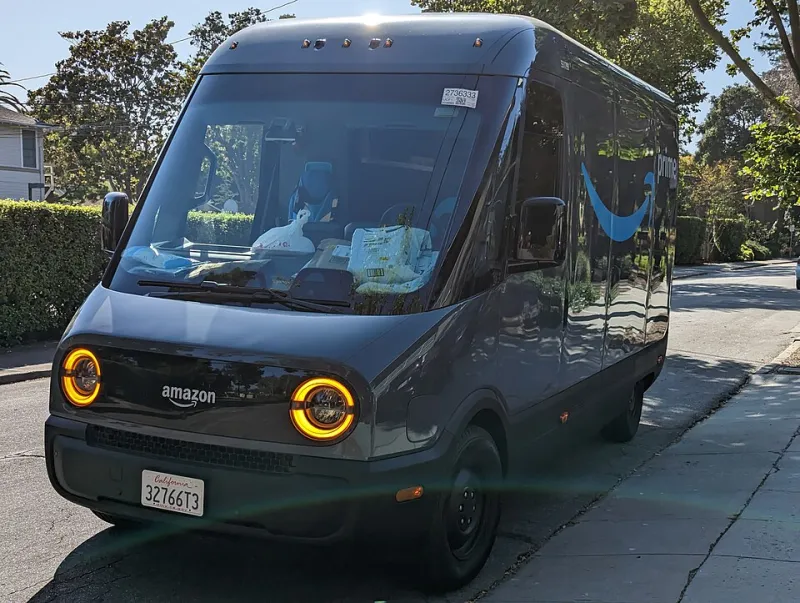
Photo: Mliu92, CC BY-SA 3.0, via Wikimedia Commons
The standard electric vehicle pilot is expensive, slow, and frequently inconclusive. A fleet leases three trucks, installs a charger, runs them for a year, and then discovers that the routes chosen for the trial were selected by intuition rather than by data. The vehicles perform adequately. The charging does not. The conclusion — "EVs are not ready for us" — is drawn from an experiment that was never designed to answer the question.
The question worth asking is narrower and far more answerable: which specific routes, run by which specific vehicles, on which specific days, can be served by an electric truck today without degrading service? Most fleets already own the data required to answer it.
The Pilot Problem
Electrification carries three distinct risks. Range risk is the one everyone discusses. Charging risk — whether the depot can deliver enough power, at the right times, without triggering demand charges that erase the fuel savings — is the one that most often kills programs. Residual risk is the quiet one: a vehicle specified for a duty cycle it cannot serve becomes a stranded asset with a shortened and expensive life.
A twelve-month pilot resolves these risks sequentially and at full cost. A data audit resolves most of them in ninety days at comparatively trivial cost.
Read the Duty Cycle You Already Run
The core insight is that a fleet is not a single duty cycle. It is a portfolio. A tractor that runs 480 miles between Chicago and Indianapolis on Tuesdays has almost nothing in common with a box truck that makes 31 stops inside a fifteen-mile radius and returns to the same yard every night.
Telematics platforms record the inputs needed to separate them: trip distance, stop count, engine hours versus miles, idle duration, time of day, day of week, route geography, and dwell at the home depot. Clustering trips by these attributes produces natural duty-cycle segments — and those segments, not vehicle classes, are the correct unit of electrification analysis.
Four Numbers That Decide Whether a Route Works
Daily distance distribution, not average. Average daily miles are almost meaningless. The 95th percentile is what matters, because a route that works on eleven days out of twelve and strands a driver on the twelfth is not a working route. A genuine EV candidate typically has a tight distance band and a predictable ceiling.
Energy consumption per mile, adjusted for load and weather. Manufacturer range figures are laboratory conditions. Real consumption rises with payload, grade, and temperature. Fleets in Minnesota and North Dakota should be modeling January, not April. Historical telematics data combined with route elevation profiles produces a defensible consumption estimate for each segment.
Non-propulsion energy load. This is where many models go wrong. Reefer units, liftgates, auxiliary power units, and extended HVAC draw real energy. A route with heavy accessory load may consume 20 to 30 percent more energy than its mileage alone suggests. It must be modeled in kilowatt-hours, not inferred from diesel idle.
Available charging time. A truck that returns to the yard at 19:00 and departs at 05:00 has ten hours of depot dwell. That is a usable window. A truck that returns at 23:00 and leaves at 04:00, or that never returns at all, is a different problem requiring en-route charging and a different business case entirely.
Modeling Charging Before You Buy a Charger
The depot is usually the binding constraint, and it is rarely a vehicle problem. Charging simulation should consider arrival state of charge, charger power output, the charging curve's taper above roughly 80 percent, the number of vehicles sharing each charger, and the site's existing electrical service.
Demand charges deserve particular attention. A site that adds several high-power chargers without load management can see its monthly utility bill rise sharply even when total energy consumption is modest, because the peak draw sets the rate. Managed charging — sequencing sessions, capping site peak, shifting flexible sessions to off-peak hours — is a software problem, and it should be specified alongside the hardware.
Interconnection timelines are the other hidden variable. In several US utility territories, upgraded service can take a year or more to energize. Fleets that order vehicles before confirming site power often receive trucks they cannot charge.
The Residual Value Question
Battery capacity is the largest single cost driver in an electric truck. Specifying more range than a route requires is a straightforward waste of capital. Specifying less creates operational failure and a resale problem.
Duty-cycle data allows a fleet to right-size: match battery capacity to the 95th-percentile distance plus a defined reserve, and reserve the larger packs for the routes that genuinely need them. It also supports a phased deployment in which vehicles are assigned to segments with the highest confidence and lowest variance, leaving the difficult segments on diesel until charging infrastructure or vehicle capability catches up.
A Practical Sequence
- Ninety-day data audit. Segment the fleet by duty cycle using existing telematics history. No procurement decisions during this phase.
- Shadow modeling. For the top candidate segments, model energy consumption, charging schedules, and total cost of ownership against current diesel performance, including the federal commercial clean vehicle credit and any applicable state incentive.
- Targeted pilot. Deploy three to five vehicles onto the best-fit segments — not the most visible ones. Instrument charging behavior from day one.
- Infrastructure scale-up. Expand depot charging only after measured consumption confirms the model.
- Annual re-underwriting. Routes change. Customer mixes change. A segment that was EV-ready in 2026 may not be in 2028, and the data should be reviewed on a schedule rather than after a problem.
What the Data Cannot Tell You
Telematics history describes what a route has been, not what it will become. It will not predict a new customer contract that doubles mileage, a driver who treats the throttle differently in an electric truck, or a utility that revises its rate structure. Those require pilot evidence and commercial judgment.
What the data does do is shrink the range of outcomes. Electrification stops being a bet on a manufacturer's brochure and becomes a routing and capital-allocation decision — the kind of decision fleet operators already know how to make.